
Google Ads in 2025 has moved beyond just bidding higher — success now comes from smart automation, real-time data, and AI-driven optimization.
Whether you’re a small business owner, startup founder, e-commerce seller, or digital marketer, Smart Bidding can help you get more conversions, lower costs, and scale your campaigns — if you know how to use it correctly.
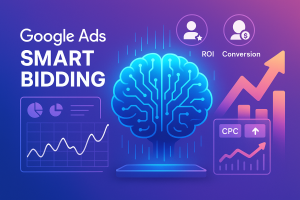
This guide covers everything: the basics, strategies, setup, mistakes to avoid, real examples, and tools to succeed.
What Is Smart Bidding? (Simple Definition)
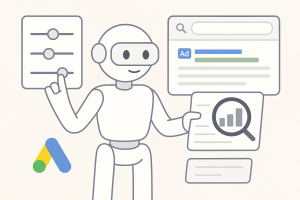
Think of Smart Bidding as your 24/7 AI assistant inside Google Ads. It:
-
Adjusts bids automatically
-
Uses real-time data and signals
-
Predicts who is most likely to convert
-
Optimizes for your chosen goal (CPA, ROAS, conversions)
Signals it considers include: device, location, audience behavior, time, intent, and even hundreds of hidden factors humans can’t process in real time.
In short:
Manual bidding = guesswork
Smart Bidding = data-driven, predictive optimization
Why Smart Bidding Matters in 2025
Manual bidding struggles because:
-
User behavior has changed drastically
-
Google SGE (Search Generative Experience) impacts traffic
-
Privacy rules limit tracking
-
Competition is higher than ever
Smart Bidding reacts faster, uses more data, and adapts continuously, giving your campaigns a competitive edge.
How Smart Bidding Works (Behind the Scenes)
Google’s AI combines:
-
Auction-time bidding: adjusts bids for every single auction
-
Predictive machine learning: analyzes historical and real-time data
-
Signal processing: over 100 factors, including device, location, intent, and audience
Result? More accurate bids and better ROI than manual adjustments.
Types of Smart Bidding Strategies
A. Maximize Conversions
Goal: Get the highest number of conversions within your budget
Best for: Beginners, lead generation, small campaigns
Example: A local dentist clinic gets more form submissions without increasing spend
B. Maximize Conversion Value
Goal: Maximize total revenue
Best for: E-commerce stores with different product prices
Example: An online fashion store increases total sales value by 40%
C. Target CPA (tCPA)
Goal: Achieve a target cost per acquisition while maximizing conversions
Best for: Lead generation campaigns, predictable CPL
Example: A SaaS startup maintains a ₹500 CPA while increasing leads
D. Target ROAS (tROAS)
Goal: Maximize revenue while hitting a target return on ad spend
Best for: High-ticket products, e-commerce scaling
Example: An online jewellery store improves ROAS from 2.5 → 4.1
E. Enhanced CPC (eCPC)
Goal: Hybrid approach; manually set bids with AI adjustments
Use for: Transitioning from manual to Smart Bidding
Manual Bidding vs Smart Bidding
| Feature | Manual Bidding | Smart Bidding |
|---|---|---|
| Control | High | Medium |
| Learning | None | AI-driven |
| Best For | Small campaigns, testing | Scaling & profitable campaigns |
| Real-Time Adjustment | No | Yes |
| Performance | Inconsistent | Stable & predictable |
Verdict: Manual bidding works for early testing. Smart Bidding is essential for long-term growth.
When NOT to Use Smart Bidding
Avoid if:
-
You have <15 conversions per month
-
No proper conversion tracking
-
Campaign is brand-new with zero data
-
Low budgets
-
Rapid campaign changes
Smart Bidding works best with enough data, time, and proper tracking.
Step-by-Step Setup for Smart Bidding
-
Set up accurate conversion tracking (GA4, enhanced conversions, GTM)
-
Select the right strategy (Maximize Conversions, tCPA, tROAS, etc.)
-
Allow the learning phase: 7–30 days without major edits
-
Provide sufficient budget: minimum ₹500/day for small campaigns
-
Review and scale gradually: increase budgets by ≤20% at a time
Common Mistakes to Avoid
❌ Changing bid strategies too often
❌ Expecting immediate results
❌ Using Smart Bidding without tracking conversions
❌ Feeding incorrect or low-quality data
❌ Over-editing campaigns during learning phase
Smart Bidding Best Practices (2025 Edition)
-
Use broad match keywords + Smart Bidding
-
Improve landing page experience for higher conversion rate
-
Add audience signals
-
Give the algorithm enough budget and time
-
Track conversion value, not just count
-
Compare performance by device, location, and audience
Smart Bidding + AI + Google SGE Trends
With Google SGE and AI changes:
-
Fewer but more intentional clicks
-
Smarter targeting based on conversational search intent
-
Automated creative + bidding synergy improves efficiency
Smart Bidding is now AI-optimized by design, adapting automatically to 2025’s search ecosystem.
Real-World Examples
Example 1 — Dentist Clinic: Maximize Conversions → Leads ↑32%, CPA ↓21%
Example 2 — Jewellery Store: Target ROAS → Revenue ↑56%, ROAS 2.5 → 4.1
Example 3 — SaaS Startup: Target CPA → CPL stabilized at ₹520, lead quality ↑
These examples show how Smart Bidding adapts to goals and improves ROI automatically.
Tools & Resources
Tools:
-
Google Ads
-
GA4
-
Google Tag Manager
-
Looker Studio
-
PPC automation tools (Adalysis, Optmyzr)
Learning Resources:
-
Google Skillshop
-
Search Engine Journal
-
Surfside PPC, MeasureSchool (YouTube)
FAQs
Q. Is Smart Bidding better than manual bidding?
✅ Yes, for 90% of campaigns
Q. How long does the learning phase take?
⏳ 7–30 days
Q. Can beginners use Smart Bidding?
✅ Absolutely
Q. Will it work with small budgets?
⚠ Yes, but results take longer
Q. Does it reduce costs?
✅ When paired with correct tracking and strategy
Conclusion
Smart Bidding is no longer optional — it’s essential for anyone serious about Google Ads in 2025. With proper setup, data quality, and strategy, it can:
-
Increase conversions
-
Reduce wasted spend
-
Improve ROAS
-
Scale campaigns profitably
The future is AI-powered, automated, and smart. Don’t get left behind.
Want to maximize your Google Ads performance with Smart Bidding?
Let Trafixo optimize your campaigns, reduce your CPA, and maximize profits with proven strategies.
Contact us today!