
Introduction: How AI is Changing Google Ads
If you’ve run Google Ads before, you probably know the struggle—choosing keywords, setting bids, writing ads, and still wondering if your money is being spent wisely.
Well, things have changed. Artificial Intelligence (AI) is now built right into Google Ads, making ads smarter, faster, and more effective than ever.
Earlier, running ads was like throwing a fishing net in a big lake and hoping for the best. Today, with AI, it’s like using a smart sonar that shows you exactly where the fish are.
For small businesses and marketers in India, this means one thing: less wasted money, more conversions.
From Manual Ads to AI-Powered Campaigns
Back in the early days, advertisers had to do everything manually:
- Choose keywords
- Set CPC bids
- Test different ad copies
- Track results manually
It was time-consuming and often hit-or-miss.
Fast forward to now, and AI handles most of the heavy lifting. With tools like Responsive Search Ads, Smart Bidding, and Performance Max, Google Ads automatically learns from data and improves your campaigns 24/7.
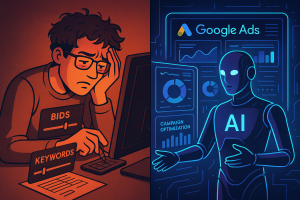
Example: A business running a Diwali campaign in India can let AI adjust targeting in real time—showing ads to the people most likely to buy. No late-night bid tweaking needed!
How AI Makes Audience Targeting Smarter
Instead of only targeting by age, gender, or location, AI digs deeper. It looks at:
- What people are searching for (search intent)
- Their past browsing and purchase behavior
- Which device they’re on (mobile vs desktop)
- What time of day they’re most active
Example: If you own a café in Mumbai, AI can figure out that young professionals searching for “best coffee near me” at 8 AM are your most valuable audience.
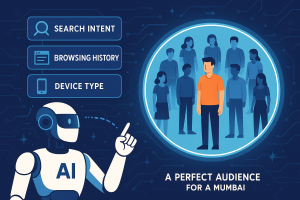
Result → Your ads reach the right people at the right time, saving you money and boosting ROI.
Smart Bidding: Let AI Handle the Math
Manual bidding used to feel like guesswork. But now AI takes care of it with Smart Bidding strategies like:
- Target CPA (Cost per Acquisition): Keeps your customer acquisition cost within your set limit.
- Target ROAS (Return on Ad Spend): Maximizes revenue for every rupee spent.
- Maximize Conversions: Finds more sales opportunities even if your budget is small.
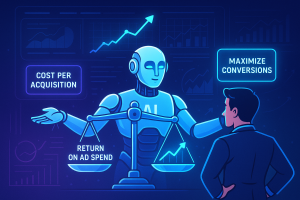
Example: An online clothing store in Delhi sets a target CPA of ₹300. AI will adjust bids in real-time to stay within budget while still bringing in quality customers.
No more late nights changing bids manually—AI does it all.
AI That Writes and Tests Your Ads
AI doesn’t just crunch numbers—it also helps with ad copy and creatives.
With Responsive Search Ads, you can add multiple headlines and descriptions. Google’s AI then automatically tests combinations and shows the best-performing one to each user.
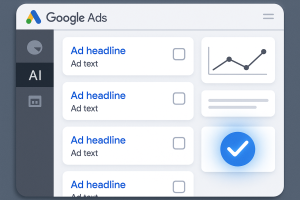
Example: A travel agency promoting Goa packages could add headlines like:
- “Book Goa Trips at Best Price”
- “Exclusive Winter Beach Deals”
- “Plan Your Holiday Today”
AI will mix and match to figure out which version works best for each traveler.
Result → Personalized ads that actually convert.
Real Case Study: Ayurvedic Startup Using AI
A small Indian e-commerce brand selling ayurvedic skincare products switched to Performance Max campaigns. Instead of running separate Search, Display, and YouTube ads, AI managed it all in one campaign.
In just 3 months, here’s what happened:
- Ad spend: ₹50,000
- Conversions: 1,200+ sales
- ROI: 4.5x (Every ₹1 spent brought in ₹4.50)
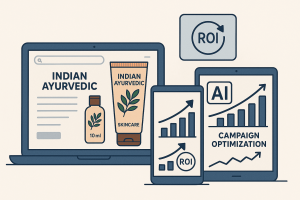
Not only did sales go up, but the founders also saved hours of manual campaign management.
Must-Try AI Tools in Google Ads
If you’re running ads in India, here are features you shouldn’t ignore:
- Performance Max Campaigns → One campaign runs across Search, YouTube, Display & Maps.
- Responsive Search Ads → AI tests ad variations automatically.
- Smart Campaigns → Perfect for small businesses with tight budgets.
- AI Insights Reports → Find trending keywords and audience patterns quickly.
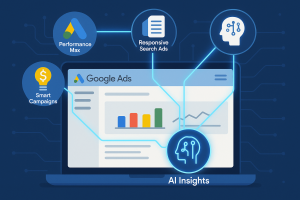
These tools level the playing field—even a small shop can compete with big brands.
Challenges of AI in Google Ads (And How to Handle Them)
While AI is powerful, it’s not perfect:
- Less control: Sometimes you don’t see why AI made a decision.
- Learning curve: AI needs time (2–4 weeks) to learn before results improve.
- Data dependency: Small campaigns with very few clicks may take longer to optimize.
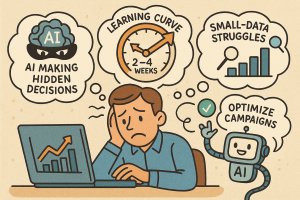
Tip: Always give AI some time to learn and feed it enough data before judging results.
The Future: What’s Next in AI-Powered Ads?
AI in Google Ads is just getting started. What’s coming next?
- Predictive Ads: Showing ads before people even search.
- Voice Search Ads: Optimized for India’s growing voice search users.
- Hyper-Personalization: Ads tailored in real-time based on exact user behavior.
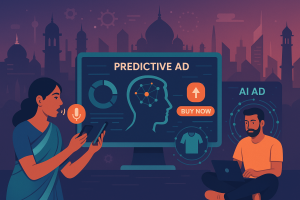
For Indian businesses, this means one thing → adapt fast or risk falling behind.
FAQs: AI in Google Ads
- Is AI only for big companies?
No! Even small businesses in India can use Smart Campaigns and Responsive Ads. - Will AI replace human marketers?
No. AI handles data, but humans set the goals, creativity, and strategy. - How long before AI starts working?
Usually 2–4 weeks, depending on your ad budget and traffic. - Can AI lower ad spend?
Yes—by cutting wasted clicks and focusing on people who are more likely to buy. - What’s the best AI feature for beginners?
Start with Smart Campaigns—easy setup and affordable.
Conclusion: Why You Shouldn’t Wait
AI is no longer a luxury in Google Ads—it’s a necessity. Whether you’re a small café in Mumbai or a startup in Delhi, using AI means smarter targeting, better conversions, and higher ROI.
The sooner you adapt, the faster you’ll grow. Businesses that ignore AI risk being left behind.
Want to set up AI-driven Google Ads for your business? Contact Trafixo today and let’s make your ad spend work smarter, not harder.